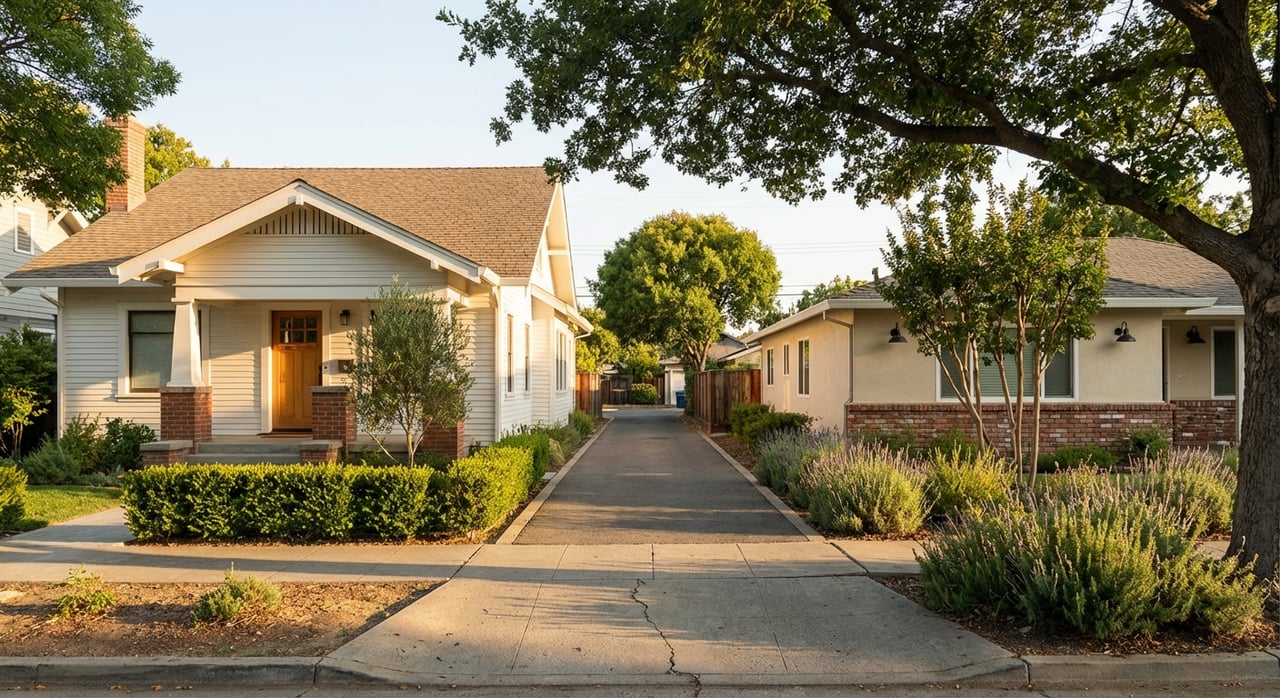
Torn between the energy of Sacramento and the elbow room of Yuba‑Sutter? You are not alone. Many buyers and sellers compare these neighboring markets to balance price, space, commute, and lifestyle. In this guide, you will get a clear, side‑by‑side look at costs, housing types, transit, and everyday living so you can choose with confidence. Let’s dive in.
Market snapshot: prices and pace
If you want a quick read on price, here is the simplest way to think about it based on recent vendor snapshots:
- Sacramento (city) typically lands around the mid‑$460k range for median sale price. Recent sources show roughly $465,000 with small year‑over‑year changes (Redfin, Jan 2026) and a similar city ZHVI near $468k (Zillow through Jan 31, 2026).
- Sacramento County, which includes higher‑priced suburban areas, trends higher with a typical value near $517,200 (Zillow ZHVI, through Jan 31, 2026). Be clear about whether you mean the city or the county. They are not the same market.
- Yuba and Sutter counties often sit in the low‑to‑mid $400k range. Yuba City’s median has hovered around $450,000 in recent readings (Redfin, Jan 2026). Various vendor feeds place both counties’ medians broadly between the low $400s and mid $400s in late 2025 through early 2026.
What this means for you: Yuba‑Sutter medians are usually similar to or a touch below Sacramento city prices and clearly below Sacramento County. Inventory is active across both regions. Yuba‑Sutter often shows fewer active listings and slightly longer days on market than the tightest Sacramento neighborhoods, but vendor snapshots still describe conditions as balanced to modestly favoring sellers in late 2025.
Pro tip: Always note the vendor and date when you quote numbers. Different data sources track different geography and time windows, so medians can vary.
What you get for your money
Sacramento housing: variety and urban access
Sacramento offers a broad mix: classic bungalows and Craftsman homes, mid‑century single‑family, townhomes, and a healthy condo market near Midtown and Downtown. You will also find new‑construction infill and small multifamily sprinkled across several neighborhoods. Central areas often carry higher price points than outlying parts of the city, and product variety tends to be strongest near employment and entertainment hubs.
Who it fits: If you value walkable amenities, condo or townhouse options, and quick access to dining, arts, and sports events, Sacramento gives you more choices per neighborhood. You may trade lot size for proximity and convenience.
Yuba‑Sutter housing: space, yards, and lower density
Yuba and Sutter counties lean more single‑family and lower‑density, with a noticeable share of manufactured homes compared with Sacramento County, based on ACS summaries. You will see older modest homes, suburban subdivisions, newer infill (including areas like Plumas Lake and parts of Olivehurst), and larger‑lot or rural properties beyond city cores. Expect more single‑story layouts, larger yards, and a lower price per square foot than comparable Sacramento neighborhoods. For a data backdrop on housing structure types by county, review ACS‑based context from regional datasets like ProximityOne’s summaries of local composition (detached vs. attached vs. manufactured). Explore an ACS‑based county profile reference.
Who it fits: If you want room to spread out, a bigger garage, or the chance at small acreage within a mid‑market budget, Yuba‑Sutter is often the better value.
Commute and connectivity
Drive distance and time
Driving from downtown Sacramento to Yuba City is about 40–42 miles, often taking around 40–45 minutes in normal conditions. Your actual commute depends on your exact start and end points, the route, and the time of day. Use a live map to test a weekday drive at your target times so you know what to expect. For a general distance reference, see this quick calculator from Travelmath. Check the drive distance summary.
County‑level averages from the American Community Survey list mean travel‑to‑work times at about 27–28 minutes for Sacramento County, around 27 minutes for Sutter County, and around 31–32 minutes for Yuba County. These are county averages, not door‑to‑door commutes into downtown Sacramento. If you plan to live in Yuba County and work in the city, expect a longer daily drive. See U.S. Census QuickFacts for context.
Public transit options
Most commuters from Yuba‑Sutter drive, but there is a viable bus link to downtown. Yuba‑Sutter Transit runs local routes as well as weekday commuter and midday express service to downtown Sacramento. Service is limited compared with large urban systems, so you will want to check schedules, stops, and park‑and‑ride options to confirm fit. Review Yuba‑Sutter Transit’s commuter and midday express info.
Commute budgeting tips
- Test your exact commute at least twice during peak hours in both directions.
- Price your time: multiply extra commute minutes by 2 for a round trip and consider how that impacts your weekday schedule.
- Estimate vehicle costs. Consider fuel, maintenance, tires, and insurance when comparing a longer drive to a closer‑in location.
- If remote or hybrid work is possible, weigh how many in‑office days you will have each week.
Lifestyle and amenities
Sacramento: urban energy and convenience
Sacramento is known for food and culture, with a “Farm‑to‑Fork” identity, museums, major arena events, a strong healthcare cluster, and Sacramento International Airport for easy travel. If you want year‑round events, a bigger dining scene, and more nightlife, city living delivers. For a broad overview of activities and events, explore the city’s visitor resources. Discover things to do in Sacramento.
Yuba‑Sutter: outdoor access and small‑town feel
Yuba‑Sutter leans into river life and local open space. The Feather River, local parks, and access to the Sutter Buttes offer plenty of fresh‑air recreation. Many neighborhoods feel quieter and lower‑density, which appeals to buyers seeking a slower pace and more privacy. You trade some urban intensity for space and a small‑town rhythm.
Risks and due diligence to factor in
Floodplain, levees, and insurance
Much of Yuba‑Sutter sits within river systems protected by levees. If you target homes near river valleys, review FEMA flood maps, ask about local levee certifications, and plan for possible flood insurance requirements. Counties maintain public resources to help you get oriented. Start with Sutter County’s floodplain information hub and then consult your lender and insurance provider for property‑specific guidance.
Wildfire and utility shutoff awareness
Foothill areas and some rural parcels in northern Yuba County carry higher wildfire risk than central Sacramento. If a foothill home is on your list, review state hazard maps and ask about defensible space, insurance availability, and potential public safety power shutoffs. Site‑specific checks are essential.
Property systems and access
Rural properties can include wells and septic systems rather than municipal utilities. Budget for inspections and potential upgrades. Also confirm year‑round access, especially on private or unpaved roads that can be affected by winter storms.
A practical decision checklist
Use this no‑nonsense list to compare Sacramento and Yuba‑Sutter on equal footing:
- Map your week
- List your regular destinations: work, school, childcare, healthcare, recreation, and airport.
- Run live commute tests at peak times for your top two home areas.
- Compare apples to apples
- Look at similar homes by type and size in both regions, such as 3‑bed/2‑bath single‑family homes. Track list price, recent sale comps, and price per square foot for a fair comparison.
- Weigh lifestyle must‑haves
- Urban walkability and condo options point you toward Sacramento. Extra yard, a shop, or room for toys often leans Yuba‑Sutter.
- Budget real commute costs
- Estimate daily time and vehicle costs for each choice. Remember parking, tolls if any, and wear‑and‑tear.
- Check site‑specific risks
- Review flood maps and levee status near rivers, ask about wildfire hazard in foothill zones, and confirm utilities (well, septic, or public). Start with county resources like Sutter County’s floodplain page linked above.
- Plan your purchase or sale timeline
- If you are selling to buy, talk through expected days on market, list‑to‑sale ratios, and net proceeds after costs. In Yuba‑Sutter, your local REALTOR association resources and MLS data can help set realistic expectations.
- Get local, hands‑on support
- Work with a full‑service agent who knows both markets, can flag property‑specific risks, and will help you compare options with real numbers.
Which move fits you best?
If you want maximum choice in condos and townhomes, a short hop to concerts and dining, and a central address, Sacramento is a strong match. If you want more space for your budget, a quieter street, or even a shot at small acreage, Yuba‑Sutter often delivers better price‑per‑square‑foot value. The right pick comes down to your weekly routine, commute tolerance, and how you rank yard space versus urban convenience.
Ready to compare real homes and numbers side by side? Reach out to Ginny Ritz for a personalized consult or a free home valuation. You will get hands‑on guidance, local insights across both regions, and a calm, step‑by‑step plan for your next move.
FAQs
How much cheaper is Yuba‑Sutter than Sacramento?
- Recent vendor medians place Yuba and Sutter counties in the low‑to‑mid $400k range and Sacramento city near $465,000 (Redfin, Jan 2026), while Sacramento County trends higher around $517,200 (Zillow ZHVI through Jan 31, 2026); always cite vendor and date because methods differ.
Is public transit a realistic option from Yuba‑Sutter to downtown Sacramento?
- Yes for some commuters: Yuba‑Sutter Transit runs weekday commuter and midday express buses to downtown Sacramento, but frequency is limited compared with big‑city systems, so confirm schedules, stops, and park‑and‑ride options in advance; start with the agency’s commuter page: Yuba‑Sutter Transit midday express.
How long is the drive from Yuba City to downtown Sacramento?
- The distance is about 40–42 miles and typically takes around 40–45 minutes in normal traffic, though your trip will vary by route and time of day; for a general reference, use a drive‑distance tool like Travelmath: Sacramento to Yuba City driving overview.
What hidden due‑diligence items should buyers check in Yuba‑Sutter?
- Review flood maps and levee certifications for river‑adjacent properties, confirm whether the home uses well and septic or public utilities, and ask about wildfire risk in foothill zones; county pages like Sutter County’s floodplain resource are a good starting point: Sutter County flood information.
How do home types differ between Sacramento and Yuba‑Sutter?
- Sacramento offers a wider mix, including condos and townhomes near urban cores, while Yuba‑Sutter leans toward single‑family detached homes, larger lots, and a noticeable share of manufactured homes; see ACS‑based county composition references such as ProximityOne for structure‑type context: County structure‑type reference.